Explore the Colorful Cities of America
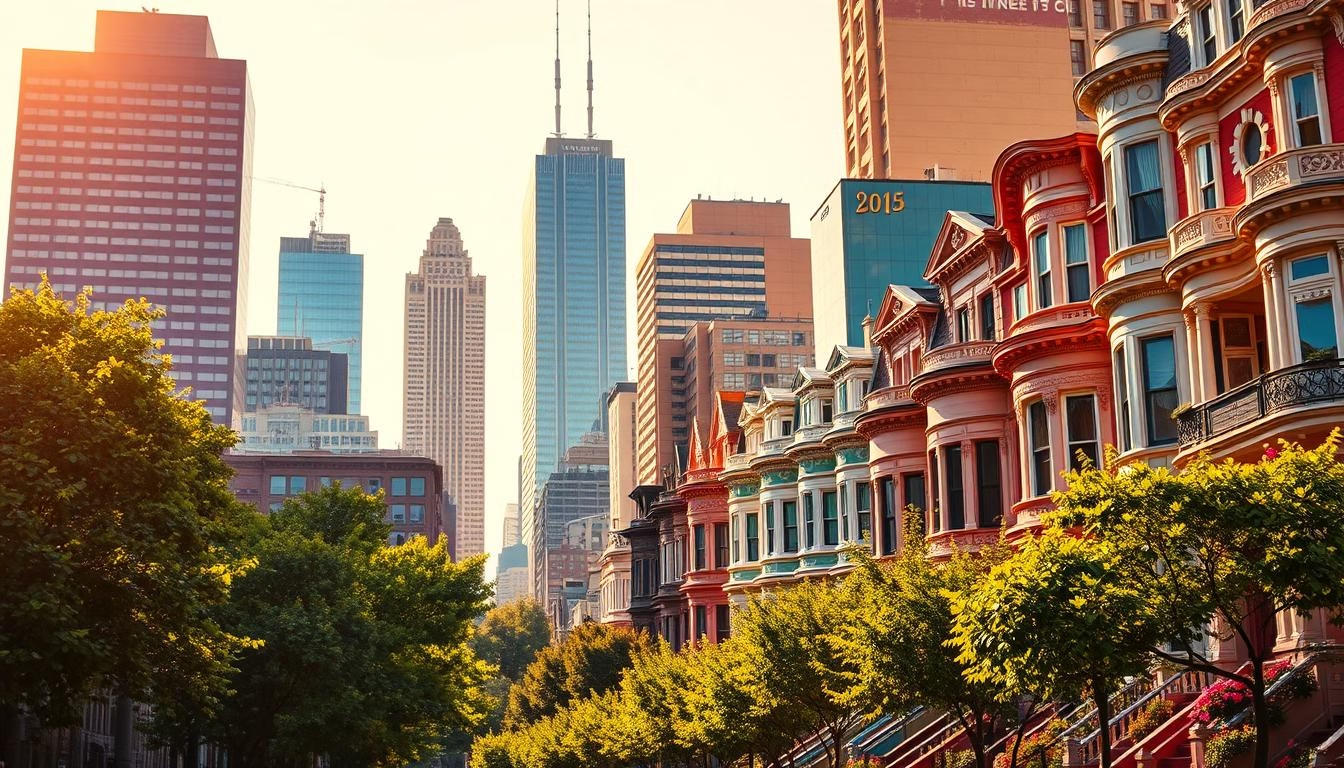
Welcome to a journey through America’s most visually striking urban gems. Picture streets lined with buildings painted in bold blues, sunny yellows, and fiery reds. These neighborhoods aren’t just pretty backdrops—they’re living stories of creativity and cultural pride.
From historic districts to modern artistic hubs, each city offers a unique personality shaped by its palette. You’ll find coastal towns where every house gleams like a seashell and urban blocks transformed into open-air galleries. These vibrant spaces turn ordinary streets into landmarks that travelers adore.
Why do communities embrace such vivid designs? Some honor heritage, while others celebrate individuality. The result? Iconic destinations that blend art with everyday life. Visitors from around the world flock here to experience streets that feel like walking through a rainbow.
Key Takeaways
- Discover neighborhoods where architecture meets artistry
- Learn how local traditions shape vibrant urban designs
- Explore historic and modern communities side by side
- See how color transforms streets into global attractions
- Find out why these areas become cultural landmarks
Introduction: A Kaleidoscope of American Urban Beauty
Discover how American communities paint their stories in bold and bright shades. These eye-catching districts don’t just happen by accident—they’re born from a mix of cultural pride and smart design choices. Let’s explore why some areas become unforgettable visual landmarks.
What Makes a Place Stand Out in Color
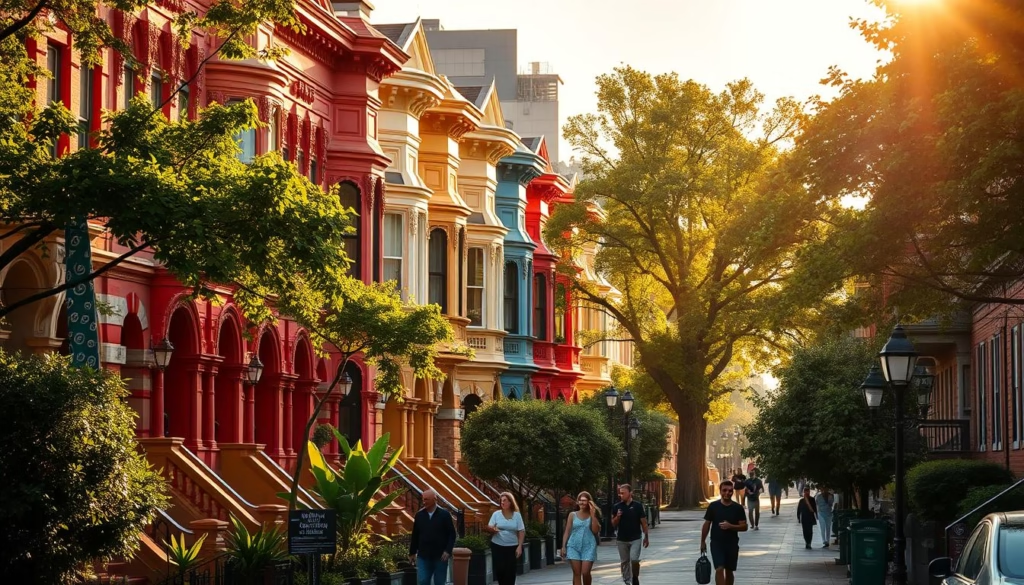
Great color schemes do more than look pretty. They create emotional connections. Bright blues might mirror coastal waters, while earthy reds could nod to local clay traditions. These choices turn ordinary blocks into living postcards.
Three key factors shape standout neighborhoods:
- Historical ties to cultural roots
- Creative responses to bland architecture
- Shared community vision
The best examples balance personal style with group harmony. A turquoise house might complement a coral neighbor, creating rhythm without matching. This approach lets individual voices shine while forming a united streetscape.
Colours also boost local pride. Residents often report feeling happier in vivid districts. Visitors sense this energy too—it’s why these areas become Instagram favorites and bucket-list stops.
The Historical Roots of Colorful Architecture in America
America’s rainbow-hued streetscapes didn’t spring up overnight. They’re living history books where every shade tells a story. Early settlers brought more than furniture across the ocean—they carried entire color traditions in their cultural baggage.
From Colonial Influences to Modern Expressions
Spanish colonists shaped the Southwest with sunset-inspired terracotta walls and cobalt accents. Meanwhile, French settlers dotted Louisiana with lemon-yellow cottages and mint-green shutters. These weren’t just style choices—they were clever adaptations to local climates using available materials.
Practical needs drove color use too. Lighthouse keepers painted towers scarlet for visibility. Gold Rush shop owners used eye-catching turquoise to stand out in crowded towns. Today’s architects still nod to these roots while experimenting with neon murals and ombré facades.
Cultural Traditions Behind Vibrant Hues
Immigrant groups turned neighborhoods into chromatic homelands. Scandinavian communities favored buttercream yellows, while Caribbean transplants brought punchy coral pinks. Colors often held symbolic meaning—deep blues warded off evil spirits in some traditions, while red doors welcomed prosperity.
Three key influences shaped these palettes:
- Regional building materials
- Climate-specific protective coatings
- Ethnic heritage symbolism
This mix of practicality and pride created America’s signature architecture styles. From Philadelphia’s historic rows to Miami’s art deco gems, each layer of paint adds to our national story.
cities with colorful houses
America’s neighborhoods burst with chromatic character where architecture becomes community canvas. Let’s tour standout residential areas where buildings wear their regional identities like bold fashion statements.
Regional Styles That Paint the Nation
Portland’s Nob Hill proves historic houses can dazzle. Victorian facades here glow in teal and marigold, with Craftsman bungalows sporting ruby-red trims. One lavender-painted 1890s home recently sold for $1.6 million – proof that good color pays.
New York’s Catskills hide a different approach. Artist Katwise transformed a cottage into swirling rainbow stripes, creating a landmark that travelers seek like buried treasure. “It’s my love letter to joy,” she says of the psychedelic patterns.
| Region | Notable Example | Architectural Style | Color Palette |
|---|---|---|---|
| Midwest | Wheeler District (OKC) | Modern Urban | Six contrasting hues |
| Southwest | Santa Fe Adobe Homes | Traditional Pueblo | Desert sunset tones |
| West Coast | San Francisco Painted Ladies | Victorian | Triadic harmony |
| East Coast | Charleston Rainbow Row | Georgian | Pastel spectrum |
Southern places like Savannah mix heritage with flair. Their peach-and-sage cottages frame oak-shaded streets, while New Orleans’ shotgun houses sport violet and gold to match Mardi Gras energy. These choices don’t just please eyes – they preserve stories.
In Milwaukee, entire blocks revived through coordinated painting projects. Neighbors pick complementary shades, turning tired facades into united art displays. It’s proof that a fresh coat can rebuild community pride as easily as it transforms buildings.
The Artistic Influence of Street Art and Murals in Urban Design
Blank walls become storytelling canvases where spray cans and brushes redefine public spaces. Across America, street art and murals now shape neighborhoods as powerfully as architecture, turning concrete into cultural diaries. These living galleries spark conversations while celebrating local identity.
Local Murals and Hidden Gems
Some of the best art hides in plain sight. Philadelphia’s Magic Gardens mosaic labyrinth sprawls across half a block, while Denver’s RiNo District surprises visitors with alleyway masterpieces. Like Berlin’s Hackescher Markt murals, these works reward explorers who venture beyond main streets.
Community-driven projects prove art can transform spaces. The Las Palmitas neighborhood in Mexico saw crime rates drop after artists painted 209 homes in rainbow stripes. “When walls change, people change too,” notes muralist Enrique Gómez.
Celebrating Contemporary Art on City Walls
Urban centers now treat buildings as giant sketchpads. Miami’s Wynwood Walls showcase rotating installations from global creators, while Los Angeles’ Arts District blends graffiti with tech-inspired designs. These murals often tackle big themes – climate action, social justice, or digital culture.
Three ways cities benefit:
- Dull infrastructure becomes tourist magnets
- Local artists gain visibility and income
- Residents feel connected to their environment
From Portland’s flying bicycles mural to Detroit’s Heidelberg Project, street art proves public spaces can both challenge and charm. As one Brooklyn artist puts it: “Our walls talk – and everyone’s invited to listen.”
Exploring the Architectural Charm of Painted Homes
Architectural masterpieces wear their colors like personality traits – bold, subtle, or brilliantly unexpected. These painted houses transform neighborhoods into open-air design museums where every brushstroke tells a story.
Unique Designs and Patterns
Vienna’s Hundertwasserhaus apartment complex redefines architecture with wavy floors and mosaic-adorned walls. Designed by Friedensreich Hundertwasser in 1986, it proves buildings can be functional art. Across the Atlantic, similar creativity thrives in American structures.
Patterns reveal hidden narratives. A Charleston home might display chevron stripes honoring Gullah basket-weaving traditions. In Santa Fe, geometric shapes echo Native American pottery designs. These details turn walls into cultural diaries.
Three design approaches stand out:
- Historical recreations using archival paint analysis
- Modern experiments with ombré gradients
- Collaborative neighborhood color plans
Some architects play with optical illusions. A Milwaukee house uses vertical stripes to appear taller, while a Portland bungalow’s horizontal bands widen its stance. Smart color choices enhance architectural features better than any renovation.
From Virginia’s rainbow row houses to California’s mid-century gems, these painted houses prove creativity lives in every brushstroke. They remind us that architecture isn’t just about shelter – it’s about making statements that endure.
Neighborhood Spotlight: Vibrant Districts and Historic Quarters
Some neighborhoods become landmarks not through size, but through bold chromatic character. These districts blend heritage with modern flair, turning streets into living art galleries. Visitors quickly learn that every shade tells a story – of resilience, creativity, or community bonds.
Popular Districts in Iconic Cities
New Orleans’ French Quarter dazzles with iron-laced balconies in emerald and gold. Locals joke that the city invented color theory – their sherbet-hued Creole cottages predate Pantone swatches by centuries. San Francisco’s Mission District takes a different approach, where murals depicting Latino heritage wrap around Victorian buildings.
Three standout examples:
- Charleston’s Rainbow Row – 13 Georgian homes in Easter egg tones
- Philadelphia’s Elfreth’s Alley – Colonial-era houses in ochre and brick red
- Savannah’s Jones Street – Antebellum mansions in peach and sage
Cultural Vibes and Local Traditions
Annual events keep these places thriving. Tucson’s Barrio Viejo hosts a district-wide repainting fiesta each spring. “We mix pigments like our ancestors did,” explains a fifth-generation resident. “The colors fade beautifully, just like memories should.”
In smaller towns, traditions take playful turns. Nevada City, California, holds a “Best Door Prize” contest, encouraging whimsical front entries. From mermaid-scale shingles to trompe-l’oeil bookcase designs, creativity knows no bounds here.
These neighborhoods prove that preservation isn’t about freezing time. As you explore global destinations, remember America’s chromatic gems – where every brushstroke honors the past while painting the future.
Colorful Trends in Modern American Homes
Forget the beige decade – today’s homes are rocking personalities as bold as their owners. This shift goes beyond paint swatches, reflecting how we see structures as extensions of self-expression. Portland’s Nob Hill proves the value: a Victorian home there recently sold for $1.7 million, its teal-and-gold facade becoming the star attraction.
Innovative Color Palettes and Design Ideas
Designers are mixing unexpected shades like culinary recipes. Imagine charcoal walls with turquoise trim – a combo that makes neighbors pause mid-sidewalk. “We’re seeing clients treat exteriors like fashion statements,” notes LA designer Mara Holt. “Your house should make you smile before you open the door.”
Three fresh approaches dominate:
- Ombré siding that shifts from navy to sky blue
- Eco-friendly paints changing hue with temperature
- Geometric patterns using contrasting neutrals + pops of coral
Tech plays surprise roles. Solar-reactive coatings adjust colours based on sunlight, while app-controlled LED trim lights cycle through palettes. These innovations let owners refresh looks without repainting.
The trend isn’t just pretty – it’s profitable. A Zillow study found yellow-fronted houses sell for $3,400 more than expected. As one Seattle homeowner grinned: “Our periwinkle garage got us six offers in a weekend.” From historic revivals to futuristic experiments, America’s homes are finally wearing their hearts on their façades.
Captivating Street Markets & Iconic Public Spaces
Step into America’s bustling markets where every stall and storefront tells a story. These spaces blend commerce with creativity, turning shopping trips into sensory adventures. Historic architecture frames lively scenes where fresh flowers meet handcrafted treasures.
Where Commerce Meets Creativity
Seattle’s Pike Place market dazzles with crimson awnings above fishmongers tossing salmon. Vendors arrange rainbow produce beneath century-old brick arches. Locals joke the real attraction isn’t the coffee – it’s the peach-toned facades glowing at sunset.
In Boston, Faneuil Hall’s ochre buildings house modern artisans beside colonial-era cobblestones. New Orleans’ French market pairs Creole cottages with jazz drifting from open doors. These street hubs prove commerce thrives best in vibrant settings.
Don’t miss Ottawa’s historic ByWard Market. Murals splash across brick walls near vendors selling maple treats. Winter transforms the area into an ice-skating wonderland beneath twinkling lights – a way locals celebrate seasonal magic.
These districts show how design fuels community spirit. Visitors snap photos of turquoise doorways while buying fresh bread. Each purchase supports traditions as rich as the street’s palette – proof that great markets are living art.